
Peace of Mind Through Pre-Planning

October 8, 2025

A Thoughtful Gift: Finding Peace of Mind Through Pre-Planning

Let's be honest, thinking about funeral arrangements isn't exactly high on anyone's list of fun activities. It's a subject many of us instinctively push to the back of our minds. However, embracing this seemingly daunting task and choosing to pre-plan your final arrangements is one of the most thoughtful and selfless gifts you can give your loved ones—and yourself.


The process of pre-planning is about more than just checking items off a list; it’s about securing a profound peace of mind that extends well beyond your lifetime.


Alleviating the Burden of Grief

The immediate aftermath of loss is a time of intense emotional pain and confusion. It is the absolute worst time for a family to be forced to make dozens of significant, costly, and emotionally draining decisions. This is where pre-planning shines.

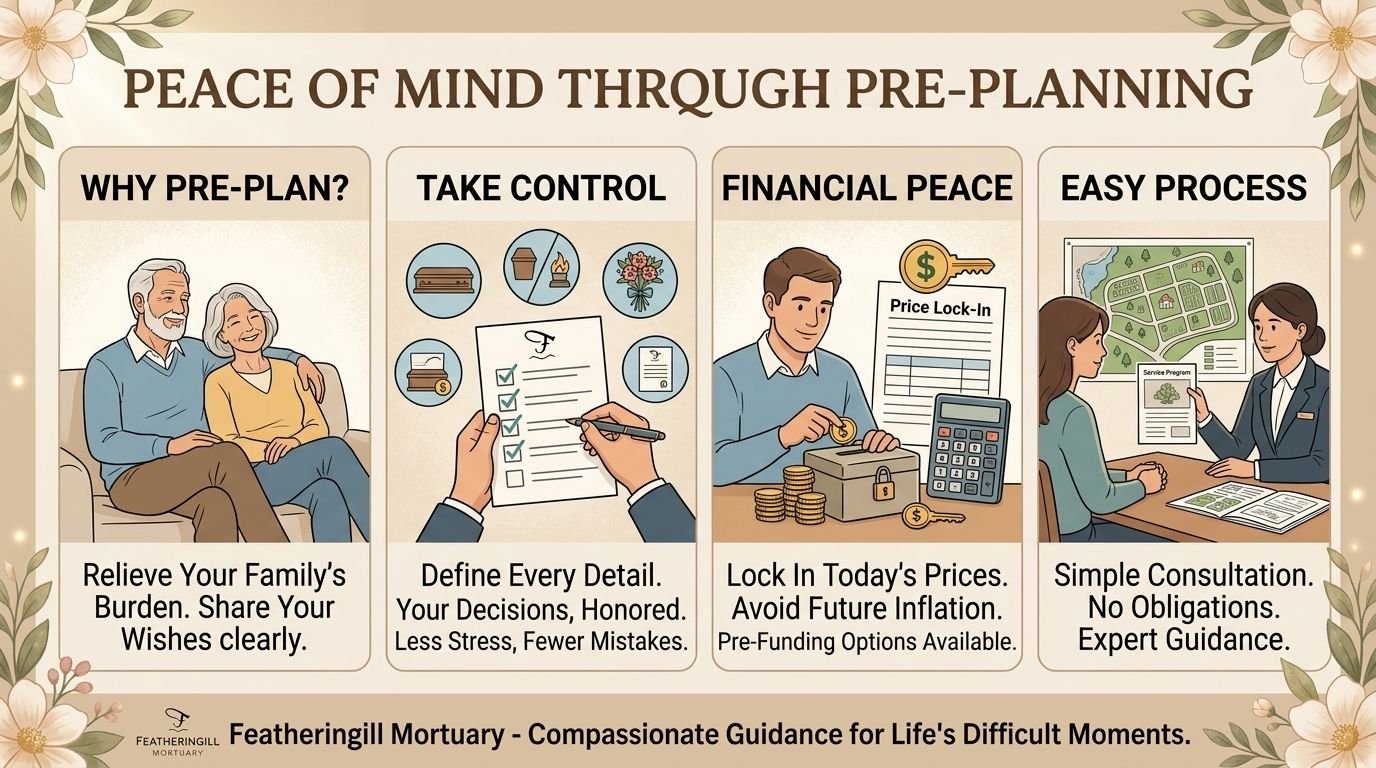
  • Reduces Stress for Family: When you pre-plan, you remove the heavy burden of decision-making from those you care about most. They won't have to guess what you might have wanted or argue over conflicting ideas. Instead, they can focus on what truly matters: grieving and supporting one another.
  • Ensures Your Wishes Are Met: This is your life's final chapter, and pre-planning guarantees it reflects your values and personality. You can specify every detail, from the big choices like burial or cremation to the smallest, most personal touches—the music, the readings, the type of service, and even who speaks. Your final wishes are honored and protected.


Practicality Meets Compassion: Financial and Logistical Foresight

While the emotional benefits are immense, the practical advantages of pre-planning offer concrete relief to your survivors.

  • Financial Foresight: Organizing and Locking in Costs. Funerals can be surprisingly expensive, and unexpected costs can place a significant strain on a grieving family's finances. Pre-planning gives you the opportunity to organize and manage these costs ahead of time. Crucially, pre-paying for services allows you to lock in prices at today's rates, insulating your family from future inflation and saving them from unexpected expenses when the time comes.
  • Flexible Pre-Payment Options: We understand that few people have the means to pay for an entire funeral up-front. That’s why, like many funeral providers, we offer a range of flexible pre-payment options. Whether you choose to pay a single lump sum or prefer to manage the cost over time through monthly installments or other pre-funding solutions, we have options to fit various budgets. This flexibility makes pre-planning accessible and ensures the financial burden is spread out, not dropped all at once on your family.
  • Time to Reflect: When a death is sudden, decisions must be made under extreme pressure. Pre-planning allows you to make thoughtful, rational choices without the emotional fog of grief influencing your judgment. You have the time to research, compare options, and reflect on what feels truly right for you and your family.


Pre-Planning: A Legacy of Love and Clarity

Taking this step is an act of deep kindness. It’s a legacy of love, clarity, and organization that speaks volumes about how much you care for your family's future well-being. By confronting this subject now, you are ensuring that your passing, while undoubtedly painful for your loved ones, will not be compounded by unnecessary stress, doubt, or financial hardship.


We understand that taking the first step can be difficult. That's why we're here to guide you through the process with the utmost compassion, clarity, and non-judgmental support. Think of us as your partners in creating a plan that truly reflects your life and provides true peace of mind for everyone involved.


By Featheringill Mortuary January 5, 2026
Scattering Cremated Remains in California: What You Need to Know Honoring a loved one's final wishes by scattering their cremated remains can be a deeply meaningful and comforting ritual. However, before proceeding, it’s crucial to understand and comply with California law governing this practice. Failure to follow these specific rules isn't just a matter of civil non-compliance; it can be classified as a misdemeanor . This post breaks down the key regulations to ensure you can proceed legally and respectfully. Rules for Scattering on Land If your chosen location for scattering is on land—be it a private estate, a forest, or a public park—there are three primary rules you must adhere to: Obtain Written Permission The most critical step is securing written permission . You must get approval from the property owner or the governing agency (e.g., a National Park, State Parks, or a private landowner) that manages the land.  Public Parks and Federal Lands: Many popular spots, like National Parks, have their own strict regulations, often requiring a specific permit or limiting scattering to certain zones. Always check with the relevant agency first. No Local Prohibition: Ensure the area you choose doesn't have a local ordinance prohibiting the scattering of human remains. No Container The cremated remains must not be scattered in a container . This means the physical urn or box should be removed from the area after the scattering is complete. Remains Must Not Be Distinguishable The act of scattering must be done in a manner that ensures the remains are not distinguishable to the public . This means the ashes shouldn't be left in a visible pile or scattered in a way that suggests a burial site or is noticeable by passersby. The goal is to return the remains to nature discreetly. Rules for Scattering at Sea Scattering ashes at sea—whether from a boat or by air—is a popular option, but the law places strict distance and location restrictions on this practice. Location: The 500-Yard Rule The primary rule for scattering at sea is about distance: the scattering must take place at least 500 yards from the shoreline . This regulation protects coastal areas and beaches. Prohibited Locations Certain locations are expressly banned for scattering, even if they extend over water: Scattering is prohibited from a bridge , pier , or dock attached to the shore . Scattering is prohibited in any lake or stream . These inland waters are subject to different environmental regulations than the ocean. Container Requirement and Exception The remains must be removed from their container before scattering into the water. Exception: A special dissolving scattering urn may be used from a boat, but the remains must be transferred into it no more than 7 days prior to the scattering date. Mandatory Reporting Requirement Regardless of where the scattering takes place at sea, California law requires a mandatory reporting step after the ceremony. Within 10 days of the scattering at sea, a verified statement must be filed with the local registrar for the county where the cremation certificate was issued. This is an administrative step that legally documents the final disposition of the remains and is essential for compliance. In Summary: Key California Laws for Scattering Cremated Remains California law treats the final disposition of human remains seriously, mandating specific rules to ensure public health, environmental safety, and respectful practice. Before honoring your loved one, you must understand these requirements, as failure to comply is a misdemeanor . If you plan to scatter ashes on land, the most crucial step is securing written permission from the property owner or governing agency (like a park service). The remains must be scattered discreetly—they should be removed from their container and must not be distinguishable to the public after the scattering is complete. Scattering ashes into the ocean is a highly restricted option. The scattering must occur at least 500 yards from the shoreline . Scattering is expressly prohibited from fixed structures like a pier or bridge, as well as in inland waters such as any lake or stream . The remains must be removed from their container, though a special dissolving urn may be used from a boat. Regardless of where the scattering takes place at sea, there is a final legal requirement: a verified statement must be filed with the local registrar within 10 days of the scattering to legally document the final disposition. By adhering to these specific rules regarding location, container use, permission, and reporting, you can proceed with the ceremony with both respect and legal peace of mind.
By Shalynn Garrett December 11, 2025
Pre-planning and pre-paying for funeral expenses—often called a pre-need funeral plan or prearrangement—is a thoughtful way to ease the emotional and financial burden on your loved ones. But what happens if you move or simply change your mind about the funeral home? The good news is that in most cases, your plan is transferable. What is a Pre-Need? A pre-need is a written contract with a funeral home, cemetery, or third-party provider outlining your wishes for funeral or burial services and merchandise (like a casket or urn). Crucially, it usually involves pre-funding those services. How Pre-Funding Works The money you pay doesn't typically go straight to the funeral home. Instead, it's held by a third party for your security, usually in one of two ways: Funeral Trust: Your money is placed in an interest-bearing account held by a bank or financial institution, often with the funeral home named as the recipient upon your death. Funeral Insurance Policy: A specific type of insurance policy is purchased, with the policy's death benefit designated to cover the funeral costs. The funeral home is usually the beneficiary. This third-party arrangement is why the funds are typically transferable—you remain the owner of the account or policy until the contract is fulfilled. Crucial Distinctions: Contract Type and Financial Control Before transferring, it's vital to know the type of contract you have, as this dictates your control and flexibility. Revocable: Generally allows cancellation and a refund (less fees). Highly flexible and easy to transfer. Funds are usually a countable asset for Medicaid/SSI eligibility. Irrevocable: Cannot be canceled, and you usually cannot get a refund. Funds must be used for funeral expenses. It can usually be transferred, but the price guarantee may be lost. Often used to make funds exempt from assets for Medicaid/SSI eligibility. Price Guarantees and Cost Differences When you transfer a pre-need, your primary financial consideration is the price guarantee. Loss of Price Guarantee: The original contract often guarantees the price of the services and merchandise at the current rate (locking out inflation). When you transfer a plan, the new funeral home is generally not obligated to honor the original funeral home's guaranteed prices. The transfer usually moves only the cash value (the money plus interest) of the trust or insurance policy. This cash value acts as a credit toward the new funeral home's current prices. If the new funeral home’s prices are higher, your family may have to pay the difference at the time of need. Non-Guaranteed Items: Most pre-need plans do not guarantee the cost of "cash advance" items (like clergy honoraria, obituaries, flowers, or state fees). These costs will always be paid at the current market rate, and the funeral home will charge the family for any difference. How to Know if a Pre-Need is in Place If you're looking for a plan for yourself or a loved one, here's how to check: Look for Paperwork: The most definitive proof is the pre-need contract or agreement itself. Look through important documents, safety deposit boxes, or files for a contract or an insurance policy that specifically names a funeral home. Contact Local Funeral Homes: If you know the general location, call funeral homes in the area and ask if they have a pre-need file under the person's name. Check with Insurance Companies or Banks: If you find a policy or bank statements that seem connected to a pre-arrangement, contact the institution (insurance company or trustee bank) listed on the documents. They can confirm the nature of the policy or account. Simple Steps to Transfer Your Pre-Need Whether you're moving, the funeral home has changed ownership, or you've simply found a firm that better suits your needs, transferring a plan is usually a simple process. Select a New Funeral Home: This is the most important step. Choose the new funeral home you wish to use. Contact the New Funeral Home: They will usually handle the entire transfer process for you. You just need to provide them with the paperwork from your original plan. Gather Your Documents: Collect your existing pre-need contract, funeral insurance policy, or trust documentation. This paperwork contains key information needed for the transfer. Sign the Transfer Request: The new funeral home will prepare the necessary transfer or assignment forms for you to sign, authorizing the change. The New Funeral Home Handles the Rest: They will send the signed authorization to the original funeral home and/or the third-party trust or insurance company. The funds or policy will be designated to the new funeral home. What About Cancellation and Closure? Cancellation and Refund Policy If you have a Revocable contract, you have the option to cancel. Refunds: The ability to get a full or partial refund, and any potential penalties, is dictated by the contract terms and State Law . Some states allow the funeral home to retain a significant portion (e.g., up to 30%) for administrative fees if you cancel a revocable trust. Funeral Home Closure or Acquisition The funds are safe in a third-party trust or insurance policy, but you need to know what happens if the original funeral home closes down or is sold: If Sold: The new owner usually assumes all existing contracts and price guarantees. If It Closes: State regulations require notification, and the third-party trustee (bank or insurance company) will guide you through reassigning the funds to a new funeral home. Your money is generally protected, but you still need to actively choose a new provider.
By Shalynn Garrett December 11, 2025
A funeral director—sometimes called a mortician or undertaker—is much more than a service coordinator. They are the compassionate guide who steps in the moment a death occurs to manage every detail until long after the service is over. They balance professional expertise with deep empathy, creating a dignified, healing experience for those who are grieving. How They Support Families Through a Difficult Time In short, they take on the burdens so the family can focus on saying goodbye. Taking Care of the Details & Paperwork They handle all the complex logistics and administrative tasks that can feel overwhelming when you're in sorrow: First Call: They are the first point of contact , immediately arranging to respectfully transport your loved one from the place of death to the funeral home. Legal Guide: They navigate the mountain of necessary paperwork, including filing the death certificate , securing all required permits (for burial or cremation), and helping with paperwork for insurance claims or veteran benefits. Service Design: They gently walk you through all the necessary choices, helping you decide on: Disposition: Burial, cremation, or other options. Products: Selecting a casket, urn, or vault. Timing: Setting the date, time, and location for the visitation and service. Vendor Coordination: They act as a central hub, coordinating everyone from the clergy and florists to musicians and cemetery staff, ensuring everything flows smoothly. Crafting a Meaningful and Unique Tribute A funeral director’s true gift is helping you honor a life that was truly unique. Personalization: They listen to your stories and traditions to design a service that genuinely reflects the deceased's personality, values, and life journey. This involves selecting music, setting up photo tributes, and ensuring all cultural or religious rites are observed. Respectful Care: They oversee the dignified preparation of the deceased, which may include embalming, dressing, cosmetic application, and casketing for viewing. Day-of Management: They run the event from start to finish. On the day of the service, they are the calm presence in charge , directing guests, managing the schedule, and ensuring every scheduled element proceeds with dignity and peace. Obituaries: They often assist the family in writing and submitting an obituary or death notice to newspapers and online platforms. Offering Compassion and Ongoing Aftercare This is where the emotional support comes in, acting as a pillar of strength during the darkest hours. Emotional Safety: They provide a steady, calm, and empathetic presence , offering a safe space where families can express their grief and make important decisions without feeling rushed or pressured. Gentle Guidance: They present options and offer professional advice, ensuring families make choices that feel right to them, even when they are emotionally vulnerable. Post-Service Support: Their care doesn't stop after the service. They often connect families with local grief counseling services and support groups, and they follow up to assist with final details like the return of cremated remains or memorial keepsakes. In essence, the funeral director is a compassionate guardian who stands with the family during their hardest time. Their expertise transforms overwhelming logistics and legal hoops into a seamless, manageable process . By gently carrying the heavy burden of coordination and paperwork, they create the sacred space necessary for the family to simply grieve, heal, and fully honor the unique life they've lost. They are the calm, knowledgeable presence that ensures remembrance can flourish when sorrow is deepest.
By Featheringill Mortuary December 1, 2025
Who Has the Final Say? Understanding the Legal Authority for Funeral Arrangements in California 
By Featheringill Mortuary October 30, 2025
A Logistical Roadmap: How We Bring a Loved One Home From Anywhere in the World
By Featheringill Mortuary October 15, 2025
Navigating the Next Steps: Your Essential Guide to Certified Death Certificates
veteran, national cemetery, American flag, headstones, rave markers,
By Featheringill Mortuary October 8, 2025
National Cemetery burial is free for veterans and eligible family. Benefits include: gravesite, headstone, flag, and perpetual care. It's the highest honor.
paperwork, aftercare, funeral
By Featheringill Mortuary October 8, 2025
Featheringill's aftercare partner handles final affairs, claims, notifications, and fraud protection, letting you truly focus on healing.
featheringill, funeral, memorial, service
By Featheringill Mortuary October 8, 2025
A funeral is a crucial step in grief. It offers a space to gather, share memories, and acknowledge loss. This final farewell is vital for finding peace and healing.