The Heart of the Role: What a Funeral Director Really Does
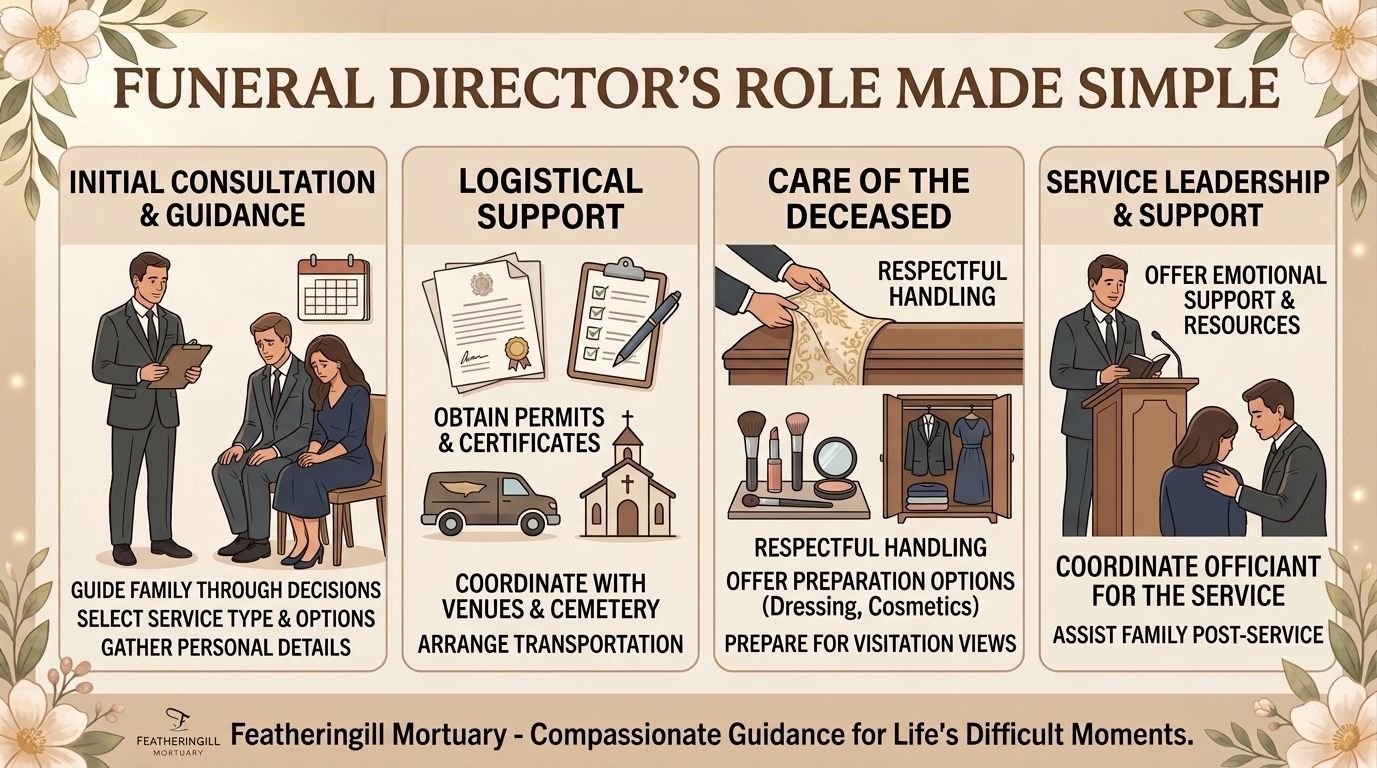
A funeral director—sometimes called a mortician or undertaker—is much more than a service coordinator. They are the compassionate guide who steps in the moment a death occurs to manage every detail until long after the service is over. They balance professional expertise with deep empathy, creating a dignified, healing experience for those who are grieving.
How They Support Families Through a Difficult Time
In short, they take on the burdens so the family can focus on saying goodbye.
Taking Care of the Details & Paperwork
They handle all the complex logistics and administrative tasks that can feel overwhelming when you're in sorrow:
- First Call: They are the first point of contact, immediately arranging to respectfully transport your loved one from the place of death to the funeral home.
- Legal Guide: They navigate the mountain of necessary paperwork, including filing the death certificate, securing all required permits (for burial or cremation), and helping with paperwork for insurance claims or veteran benefits.
- Service Design: They gently walk you through all the necessary choices, helping you decide on:
- Disposition: Burial, cremation, or other options.
- Products: Selecting a casket, urn, or vault.
- Timing: Setting the date, time, and location for the visitation and service.
- Vendor Coordination: They act as a central hub, coordinating everyone from the clergy and florists to musicians and cemetery staff, ensuring everything flows smoothly.
Crafting a Meaningful and Unique Tribute
A funeral director’s true gift is helping you honor a life that was truly unique.
- Personalization: They listen to your stories and traditions to design a service that genuinely reflects the deceased's personality, values, and life journey. This involves selecting music, setting up photo tributes, and ensuring all cultural or religious rites are observed.
- Respectful Care: They oversee the dignified preparation of the deceased, which may include embalming, dressing, cosmetic application, and casketing for viewing.
- Day-of Management: They run the event from start to finish. On the day of the service, they are the calm presence in charge, directing guests, managing the schedule, and ensuring every scheduled element proceeds with dignity and peace.
- Obituaries: They often assist the family in writing and submitting an obituary or death notice to newspapers and online platforms.
Offering Compassion and Ongoing Aftercare
This is where the emotional support comes in, acting as a pillar of strength during the darkest hours.
- Emotional Safety: They provide a steady, calm, and empathetic presence, offering a safe space where families can express their grief and make important decisions without feeling rushed or pressured.
- Gentle Guidance: They present options and offer professional advice, ensuring families make choices that feel right to them, even when they are emotionally vulnerable.
- Post-Service Support: Their care doesn't stop after the service. They often connect families with local grief counseling services and support groups, and they follow up to assist with final details like the return of cremated remains or memorial keepsakes.
In essence, the funeral director is a compassionate guardian who stands with the family during their hardest time. Their expertise transforms overwhelming logistics and legal hoops into a seamless, manageable process. By gently carrying the heavy burden of coordination and paperwork, they create the sacred space necessary for the family to simply grieve, heal, and fully honor the unique life they've lost. They are the calm, knowledgeable presence that ensures remembrance can flourish when sorrow is deepest.