Scattering Cremated Remains in California: What You Need to Know
Scattering Cremated Remains in California: What You Need to Know
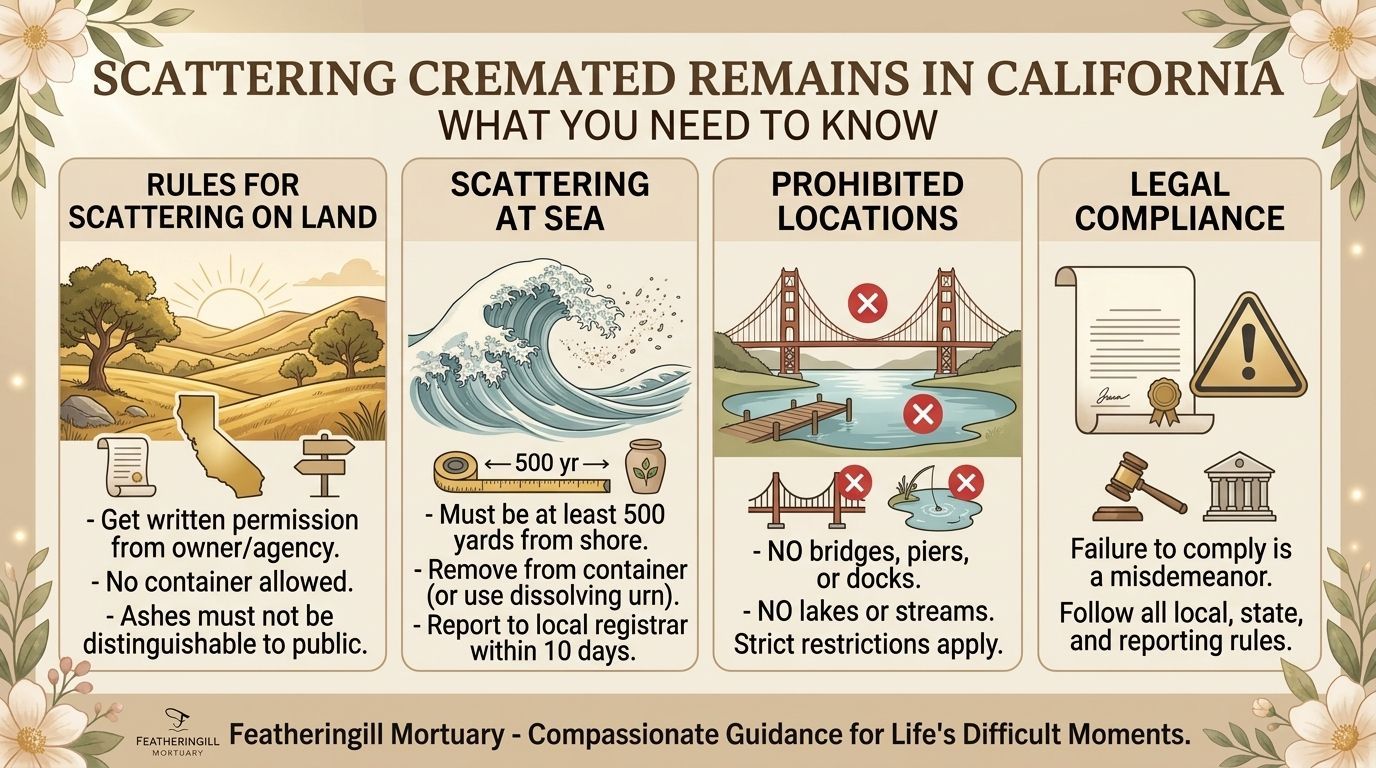
Honoring a loved one's final wishes by scattering their cremated remains can be a deeply meaningful and comforting ritual. However, before proceeding, it’s crucial to understand and comply with California law governing this practice. Failure to follow these specific rules isn't just a matter of civil non-compliance; it can be classified as a misdemeanor. This post breaks down the key regulations to ensure you can proceed legally and respectfully.
Rules for Scattering on Land
If your chosen location for scattering is on land—be it a private estate, a forest, or a public park—there are three primary rules you must adhere to:
Obtain Written Permission
The most critical step is securing written permission. You must get approval from the property owner or the governing agency (e.g., a National Park, State Parks, or a private landowner) that manages the land.
- Public Parks and Federal Lands: Many popular spots, like National Parks, have their own strict regulations, often requiring a specific permit or limiting scattering to certain zones. Always check with the relevant agency first.
- No Local Prohibition: Ensure the area you choose doesn't have a local ordinance prohibiting the scattering of human remains.
No Container
The cremated remains must not be scattered in a container. This means the physical urn or box should be removed from the area after the scattering is complete.
Remains Must Not Be Distinguishable
The act of scattering must be done in a manner that ensures the remains are not distinguishable to the public. This means the ashes shouldn't be left in a visible pile or scattered in a way that suggests a burial site or is noticeable by passersby. The goal is to return the remains to nature discreetly.
Rules for Scattering at Sea
Scattering ashes at sea—whether from a boat or by air—is a popular option, but the law places strict distance and location restrictions on this practice.
Location: The 500-Yard Rule
The primary rule for scattering at sea is about distance: the scattering must take place at least 500 yards from the shoreline. This regulation protects coastal areas and beaches.
Prohibited Locations
Certain locations are expressly banned for scattering, even if they extend over water:
- Scattering is prohibited from a bridge, pier, or dock attached to the shore.
- Scattering is prohibited in any lake or stream. These inland waters are subject to different environmental regulations than the ocean.
Container Requirement and Exception
The remains must be removed from their container before scattering into the water.
- Exception: A special dissolving scattering urn may be used from a boat, but the remains must be transferred into it no more than 7 days prior to the scattering date.
Mandatory Reporting Requirement
Regardless of where the scattering takes place at sea, California law requires a mandatory reporting step after the ceremony.
Within 10 days of the scattering at sea, a verified statement must be filed with the local registrar for the county where the cremation certificate was issued. This is an administrative step that legally documents the final disposition of the remains and is essential for compliance.
In Summary: Key California Laws for Scattering Cremated Remains
California law treats the final disposition of human remains seriously, mandating specific rules to ensure public health, environmental safety, and respectful practice. Before honoring your loved one, you must understand these requirements, as failure to comply is a misdemeanor.
If you plan to scatter ashes on land, the most crucial step is securing written permission from the property owner or governing agency (like a park service). The remains must be scattered discreetly—they should be removed from their container and must not be distinguishable to the public after the scattering is complete.
Scattering ashes into the ocean is a highly restricted option. The scattering must occur at least 500 yards from the shoreline. Scattering is expressly prohibited from fixed structures like a pier or bridge, as well as in inland waters such as any lake or stream. The remains must be removed from their container, though a special dissolving urn may be used from a boat.
Regardless of where the scattering takes place at sea, there is a final legal requirement: a verified statement must be filed with the local registrar within 10 days of the scattering to legally document the final disposition.
By adhering to these specific rules regarding location, container use, permission, and reporting, you can proceed with the ceremony with both respect and legal peace of mind.